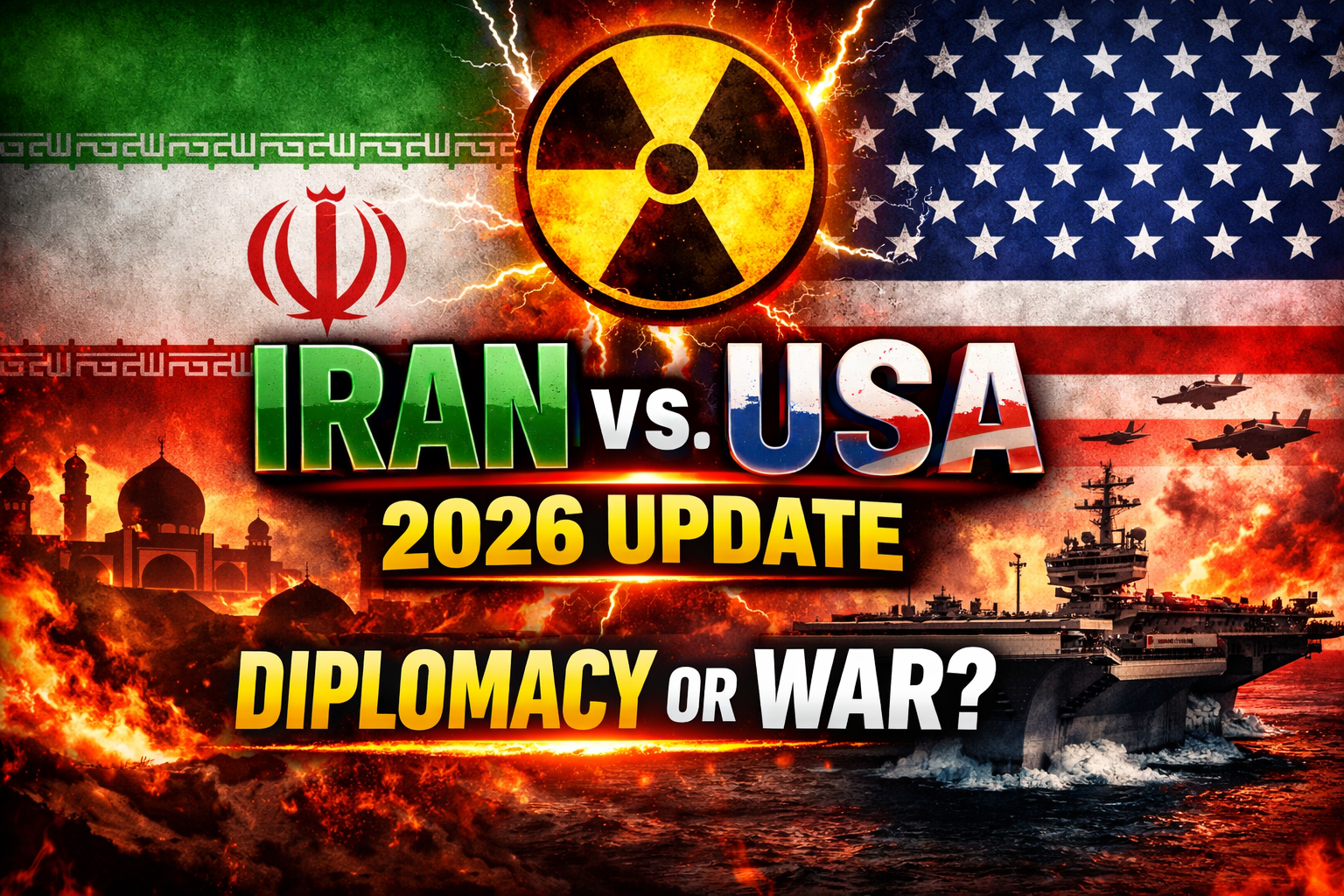

The relationship between Iran and the United States is one of the most complex and volatile geopolitical rivalries of the modern era. Once strategic allies during the Cold War, the two countries gradually transformed into adversaries after a sequence of political upheavals, ideological clashes, sanctions, proxy conflicts, and nuclear disputes. Today, their relationship is defined by deterrence, mistrust, intermittent diplomacy, and periodic military brinkmanship.
Understanding this relationship requires examining its historical roots, the structural causes of bitterness, present dynamics, and future trajectories—including the possibility of war and the role of internal and external actors in intensifying tensions.
Historical Roots of Bitterness
The 1953 Coup: Beginning of Suspicion: One of the earliest sources of Iranian resentment toward the United States was the CIA-backed coup of 1953 that overthrew democratically elected Prime Minister Mohammad Mossadegh after he nationalized Iran’s oil industry. The coup restored the Western-backed Shah to power and aligned Iran with U.S. interests.
For many Iranians, this event symbolized foreign interference in domestic affairs—an accusation that continues to shape Iranian political narratives.
Allies During the Cold War: Following the coup, Iran and the United States became close allies. Washington supported the Shah politically and militarily, viewing Iran as a critical bulwark against Soviet expansion.
However, domestic opposition to the Shah grew due to authoritarian governance and perceived Western cultural influence.
The 1979 Islamic Revolution: Strategic Rupture: The revolution replaced the monarchy with an Islamic Republic guided by Shi’i religious ideology under Ayatollah Khomeini.
Soon afterward, militants seized the U.S. embassy in Tehran and held more than fifty Americans hostage for over a year—an event that “poisoned U.S.-Iranian relations for decades.”
The crisis was a severe blow to American prestige and shaped U.S. domestic politics.
Following the incident, the U.S. suspended oil imports and froze billions in Iranian assets, marking the beginning of long-term sanctions.
Sanctions and Nuclear Anxiety: Since the early 2000s, the U.S., EU, and UN have imposed sanctions over concerns that Iran violated treaties by pursuing nuclear weapons. These measures caused inflation and unemployment to skyrocket in Iran.
The 2015 Joint Comprehensive Plan of Action (JCPOA) limited Iran’s nuclear program in exchange for sanctions relief, but the U.S. withdrew in 2018, arguing it did not curb missile development or regional influence. Iran subsequently began ignoring some restrictions.
Proxy Wars and Regional Rivalries: Since the revolution, Iran has remained a major U.S. adversary in the Middle East, sparring over nuclear ambitions, backing of regional proxies, and alleged political interference.
Incidents such as tanker attacks, militia retaliation, and the U.S. drone strike that killed Iranian commander Qasem Soleimani deepened hostility.
Present-Day Relations: Deterrence with Dialogue: Recent developments illustrate a paradox—military escalation alongside diplomatic engagement.
- The U.S. has deployed warships, aircraft, and air defenses near Iran to maintain a “credible military threat” and pressure Tehran toward nuclear negotiations.
- Iran has expressed willingness to pursue “fair and equitable negotiations” if threats are removed.
- A U.S. fighter jet recently shot down an Iranian drone that approached an aircraft carrier, highlighting operational tensions.
At the same time, regional leaders warn that the Middle East “does not need another conflict” and call for direct negotiations.
This dual strategy—deterrence plus diplomacy—defines the current phase of relations.
Can America Attack Iran?
Military analysts increasingly view the possibility as real.
- Experts have suggested the chances of U.S. strikes are “very high” due to aggressive military buildup in the Persian Gulf.
- Analysts have not ruled out attacks on Iran’s nuclear sites and missile capabilities.
However, some strategists argue the U.S. should intensify sanctions and deterrence rather than resort to direct war.
Iran has warned that any U.S. attack would trigger a “regional war,” signaling likely retaliation.
A strike is possible but remains a strategic last resort due to unpredictable escalation risks.
Chances of Escalation: The risk of confrontation is rising due to multiple overlapping crises:
- Iran faces internal legitimacy challenges and widespread protests while confronting external military pressure.
- Diplomatic channels are weakening, with Europe sidelined and major powers reluctant to intervene.
Three scenarios are frequently discussed:
- Forced compromise through negotiations
- Controlled military conflict
- Internal collapse triggering instability
Each carries global implications.
Internal Factors Driving Tension
Ideological Identity: Iran portrays itself as a leader against imperialism and views allies like Russia and China as partners in resisting Western dominance.
Domestic Political Pressures: Government crackdowns on protests and economic strain increase regime insecurity, often encouraging a hardline external posture.
Nuclear Prestige: Iran sees nuclear capability as strategic leverage, while the U.S. perceives it as a proliferation threat.
External Actors Aggravating the Conflict
Regional Powers: Attacks involving Iran-backed groups and retaliation cycles with U.S. partners contribute to instability.
Israel and Arab States: Concerns over Iranian retaliation have led to coordination with Washington on potential responses.
Great Power Politics: With Europe weakened diplomatically and Russia distracted, geopolitical balancing mechanisms are eroding—raising escalation risks.
Likely Future of Iran–U.S. Relations
Short-Term (1–5 Years)
- Continued sanctions and military signaling
- Sporadic negotiations
- Proxy conflicts rather than direct war
Medium-Term
Two possibilities dominate:
- Managed rivalry: Similar to Cold War containment.
- Strategic agreement: If nuclear limits and sanctions relief align.
Long-Term
The relationship will likely hinge on:
- Regime stability in Iran
- U.S. Middle East strategy
- Nuclear deterrence balance
Experts increasingly see escalation risk not in deliberate war but in miscalculation.
Strategic Assessment: Despite decades of hostility, both nations historically avoid full-scale war because the costs would be immense:
- disruption of global oil markets
- regional conflict
- potential involvement of multiple powers
Thus, deterrence—not reconciliation—remains the foundation of their relationship.
Iran–America relations represent a classic geopolitical rivalry shaped by historical grievances, ideological divides, nuclear fears, and regional competition. From the 1953 coup to modern drone incidents, mistrust has hardened into structural antagonism.
Yet paradoxically, both sides continue to negotiate—even while preparing for conflict.
The future is unlikely to be defined by friendship; rather, it will oscillate between confrontation and cautious engagement. The greatest danger lies not in intentional war but in escalation triggered by miscalculation, domestic pressures, or proxy confrontations.
In strategic terms, Iran and the United States remain locked in a relationship best described as “armed coexistence.”